1
2

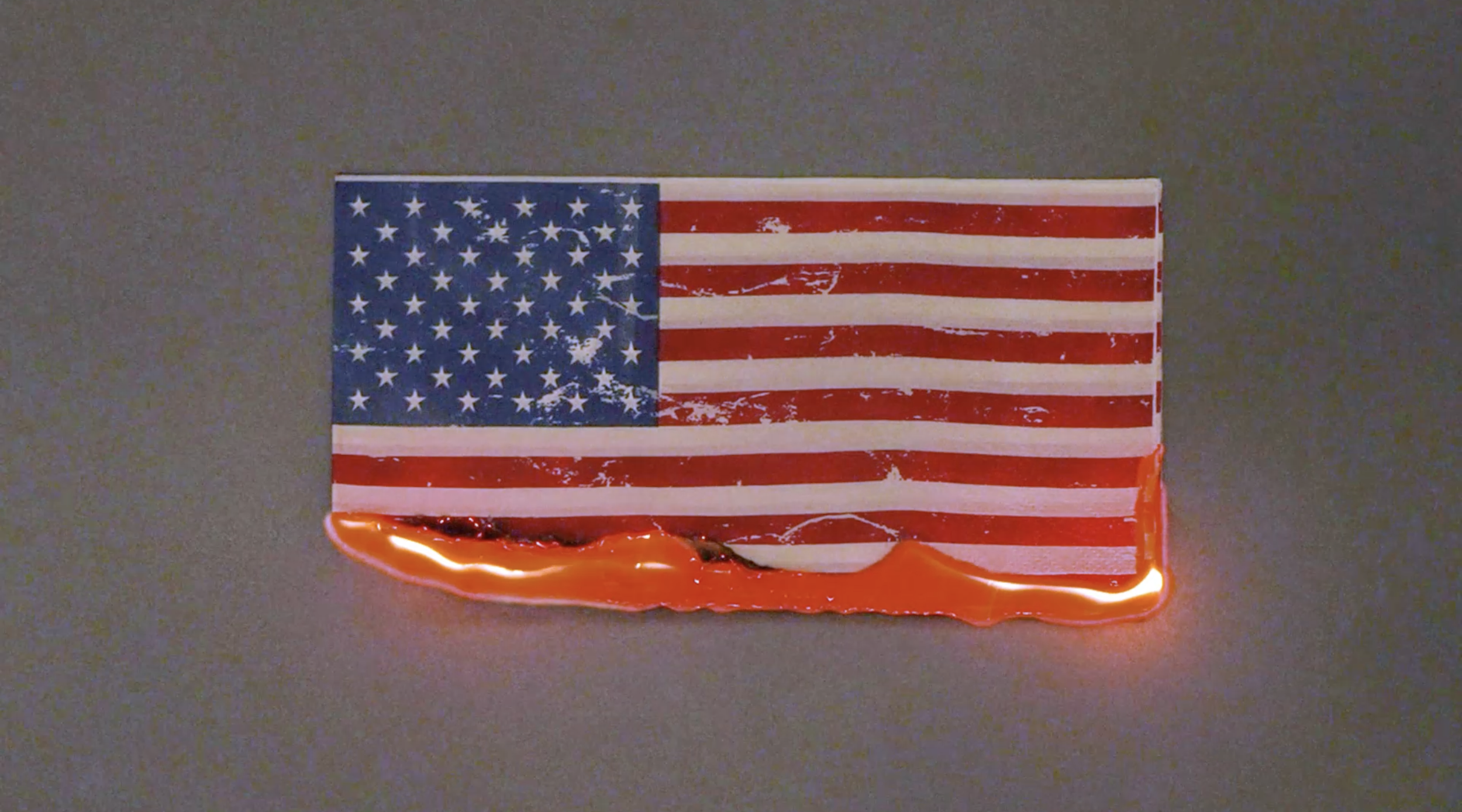
Filmed on April 28, 2025
Why is this a protest?
According to the United States Flag Code, there are specific rules for how the American flag—as both symbol and object—should be treated. For example:
The flag should never touch the ground, water, or merchandise.
It should not be worn as apparel or used as bedding or advertising.
It should not appear on disposable items.
It should not be soiled, defaced, or burned.
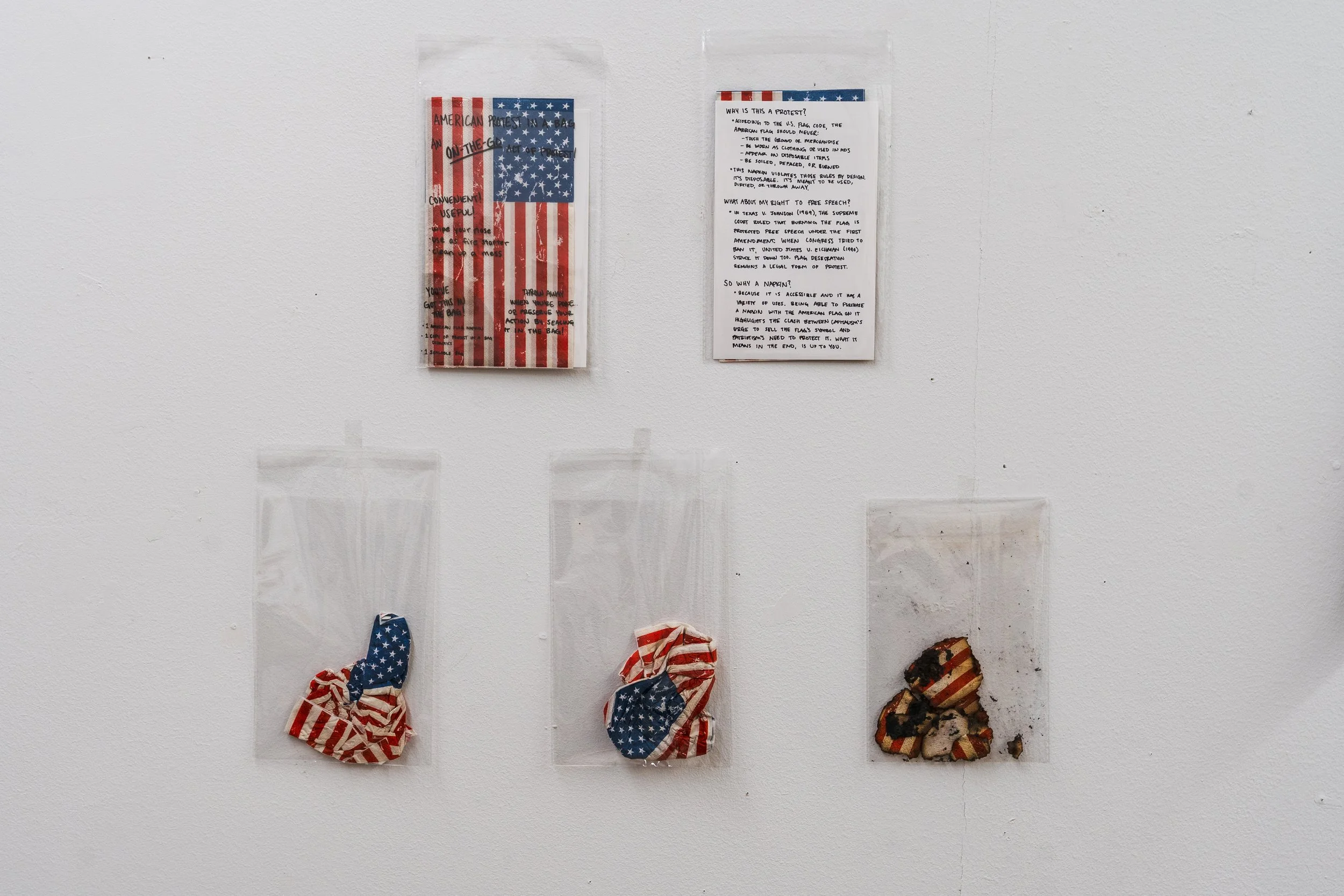
This flag—printed on a napkin—violates several of those rules by design. It is a disposable object meant to be used, dirtied, or discarded, directly contradicting the etiquette prescribed by the Flag Code. That contradiction is the protest. This object invites action: use it, question it, keep it, or destroy it.
What about the right to freedom of speech?
Exactly. In Texas v. Johnson (1989), the Supreme Court ruled that burning the American flag was a form of protected free speech under the First Amendment. This decision came after Gregory Lee Johnson burned a flag in protest outside the 1984 Republican National Convention in Dallas.
In response, Congress passed the Flag Protection Act of 1989, attempting to criminalize flag desecration. But in United States v. Eichman (1990), the Supreme Court struck it down, reaffirming that desecrating the flag—even in ways that offend others—is a constitutionally protected act of expression.
So why a napkin?
Because it is an ordinary, approachable object that is meant to clean up messes, be thrown away,
Because it’s ordinary. It’s meant to clean up messes, be thrown away, or tucked away for later. Printing the flag on a napkin turns a revered national symbol into something meant for consumption and disposal—reflecting the tension between capitalism’s need to commodify and patriotism’s desire to protect. The flag napkin is already a contradiction before you even touch it.